1
Into the spinal fluid
Nusinersen is given by lumbar puncture, injected into the fluid that surrounds the spinal cord. This is called an intrathecal injection.
Treatments
For many years, a diagnosis of SMA came with no treatment and no cure. That has changed. Treatments now exist that can slow the condition and, for many people, improve strength and quality of life. Spinraza was the first of this new generation of treatments.
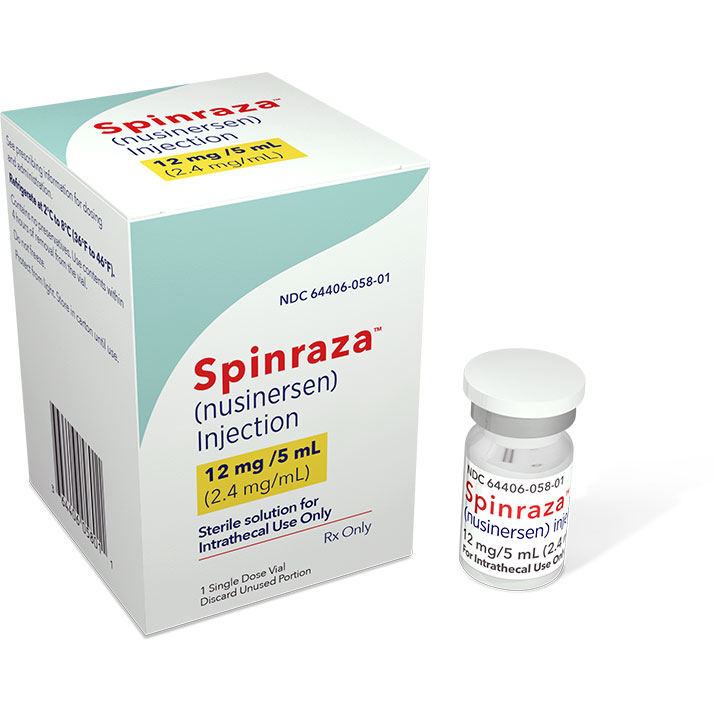
Spinraza
Spinraza is the brand name for nusinersen, a treatment for spinal muscular atrophy. SMA is caused by a shortage of a protein called survival motor neuron, or SMN, protein. Spinraza works by helping the body produce more of it, addressing an underlying cause of the condition rather than only managing symptoms.
Clinical trials showed that nusinersen can significantly slow the progression of SMA and, in many cases, improve the strength of people living with the condition. It is not a cure, and everyone responds differently, but for many families it has changed what a diagnosis means.
Treatment decisions are always made with your clinical team. This page is general information, not medical advice.
1
Nusinersen is given by lumbar puncture, injected into the fluid that surrounds the spinal cord. This is called an intrathecal injection.
2
Treatment starts with a series of loading doses, followed by maintenance doses at set intervals. Your clinical team will explain the exact schedule.
3
Appointments include checks on movement, breathing and general health, so the team can see how treatment is working for you.
Beyond Spinraza
In England, three disease-modifying therapies are recommended by NICE and funded by the NHS. Spinraza is covered above. Here are the other two, plus the treatments still being studied.
risdiplam · Roche
SMN2 splicing modifier
Like Spinraza, Evrysdi helps the SMN2 gene produce more full-length SMN protein, but it is a small molecule taken by mouth. Being able to treat at home rather than travel for injections is a significant quality-of-life advantage for many families.
What the trials showed
The FIREFISH and SUNFISH trials showed clinically meaningful improvements in motor function. The RAINBOWFISH study looked at pre-symptomatic infants, and real-world evidence continues to match the trial findings.
onasemnogene abeparvovec · Novartis
Gene replacement therapy
Zolgensma delivers a working copy of the SMN1 gene using a harmless viral vector. It is the most fundamentally different of the three NHS treatments, because it aims to replace the gene rather than change how SMN2 works.
What the trials showed
The STR1VE-US and SPR1NT trials showed striking outcomes, particularly in babies treated before or shortly after symptoms began. Long-term START follow-up showed motor function improvements maintained at 6 years and beyond.
Some children develop raised liver enzymes, so strict liver monitoring is in place. Your clinical team will explain the schedule before treatment begins.
Access criteria can differ across the UK and change over time. Your specialist SMA team is the best place to confirm what is available to you. Treatment information adapted from TreatSMA’s UK treatments overview.
Research is moving quickly. These are not yet routinely available in the UK, but they may become options in the future.
intrathecal onasemnogene · Novartis
Approved in the US, not yet available in the UK
A spinal injection form of gene therapy designed for older children, teenagers and adults who are too large for intravenous Zolgensma. It has not been authorised by the MHRA or reviewed by NICE for use in the UK, and there is no NHS funding for it.
myostatin inhibitor · Scholar Rock and others
In clinical trials, no UK approval
Studied as an add-on for people with types 2 and 3 SMA who are already on an SMN-targeting treatment. Rather than increasing SMN protein, it aims to block myostatin, a protein that limits muscle growth. A phase 3 trial has been completed.
Newborn screening
Treatment works best when it begins early. Scotland already screens every baby, and England is reviewing whether to add SMA to the newborn heel prick test.
What the research shows
Multiple clinical trials of nusinersen showed that the treatment significantly slows the disease’s progression and, in many cases, improves the strength of people with SMA. Babies treated early have reached milestones that would once have seemed out of reach.
The picture is different for everyone. Some people see clear improvements, others stabilise, and some may not respond. Your clinical team will talk through what the evidence means for your situation, including the possible side effects and the commitment of regular appointments.
Other disease-modifying treatments for SMA are also available in the UK, and research continues. We fund research into the causes and treatment of SMA so that more families have options.

More help and support
TreatSMA is a volunteer led UK charity with detailed, up to date information on living with SMA. If you want to understand the condition further, find community groups, or get help with wellbeing and benefits, their website is the place to start.
We are proud to work alongside other organisations in the SMA community. Whatever you are facing, you do not have to work it out alone.
Visit TreatSMATreatSMA is a separate charity. Their site also has information on treatments, newborn screening, news and a business directory.
Meet other families, share experiences and find local and online groups across the UK.
Find communityPractical advice and emotional support for the ups and downs of life with SMA.
Explore wellbeingClear guidance on benefits, grants, equipment and the support available to families.
Get supportDay to day information on family life, school, travel, equipment and more.
Read moreWhether you are newly diagnosed, waiting for an appointment or supporting someone you love, you do not have to work it out alone.